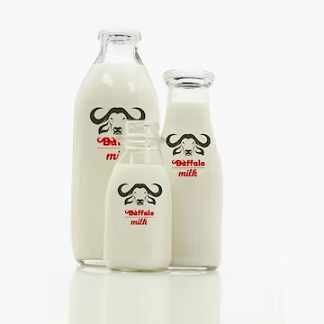
More about Organic Buffalo Milk
- Nutrient-Rich: Buffalo milk is naturally higher in fat and
protein content compared to cow's milk. It is an excellent source of essential nutrients,
including calcium, vitamin B12, vitamin A, and riboflavin.
- Organic Farming Practices: Organic buffalo milk is produced
without the use of synthetic pesticides, herbicides, and chemical fertilizers. It adheres to
organic farming principles, promoting soil health, biodiversity, and reduced chemical usage,
which can have positive environmental impacts.
- No Antibiotics or Growth Hormones: Organic regulations typically
prohibit the use of antibiotics and growth hormones in organic dairy farming. This means that
buffalo raised for organic milk are not routinely treated with antibiotics, and their growth is
not artificially accelerated.
- Better Animal Welfare: Organic farming often places a strong
emphasis on animal welfare. Buffalo raised in organic systems typically have access to outdoor
areas and are provided with conditions that promote their natural behaviors.
- Reduced Environmental Impact: Organic farming practices aim to
reduce the environmental impact of agriculture. This can include practices such as sustainable
manure management and reduced greenhouse gas emissions.
- Healthier Fats: Buffalo milk is known for its higher fat content,
which includes a higher proportion of healthy fats like conjugated linoleic acid (CLA) and
omega-3 fatty acids compared to cow's milk. These fats may have potential health benefits.
- Creamier Texture: Buffalo milk is naturally creamier and thicker
in texture compared to cow's milk, making it a preferred choice for making rich dairy products
like ghee, butter, and yogurt.
- Potential Digestibility: Some individuals who are lactose
intolerant or sensitive to cow's milk find buffalo milk easier to digest due to its lower
lactose content.
- Culinary Uses: Buffalo milk is commonly used in traditional
Indian and South Asian cuisines to make a variety of dairy products and dishes, known for their
rich flavor and texture.
- Potential Nutritional Benefits: Buffalo milk may offer slightly
different nutritional benefits compared to cow's milk, including a different balance of
nutrients and potentially unique bioactive compounds.
Notice :- It's important to note that while organic buffalo milk offers
these potential benefits, individual dietary preferences and needs can vary. Some people may prefer
it for its taste and nutritional profile, while others may choose it based on environmental or
ethical considerations. As with any food product, it's essential to read labels, understand the
source and production methods, and consult with a healthcare professional or nutritionist if you
have specific dietary concerns or conditions.